
Wildlife in Sundarban One Day Tour
Overview
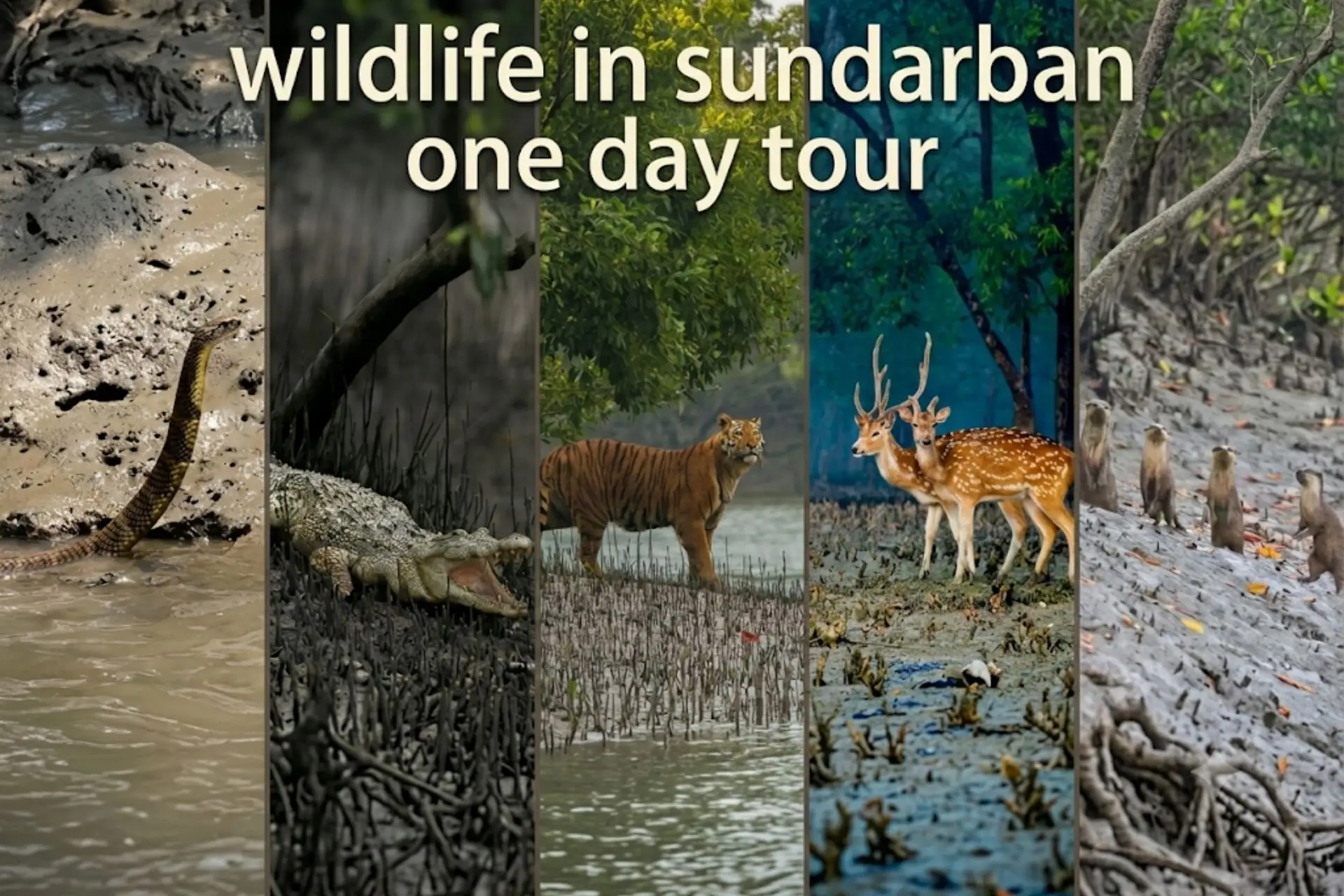
One of the most exciting parts of a Sundarban one day tour is the opportunity to experience wildlife in its natural habitat. The Sundarbans is the world’s largest mangrove forest and home to hundreds of animal, bird, reptile, and aquatic species. Many travelers book a one day safari expecting to see a Royal Bengal Tiger, but the reality is that the forest offers much more than just tigers. From spotted deer and crocodiles to monkeys, water monitor lizards, and colorful birds, a Sundarban wildlife safari tour gives visitors a chance to witness a unique ecosystem that cannot be found anywhere else in India. Understanding what animals can realistically be seen helps travelers enjoy the safari experience even more.
Why Sundarban Wildlife Is Unique
The Sundarbans is different from most wildlife destinations because animals live inside a vast network of mangrove forests, tidal rivers, mudflats, and narrow creeks. Unlike traditional national parks where wildlife is viewed from jeeps, visitors here explore the forest through boat safaris. This unique environment supports a rich variety of animals adapted to saltwater conditions. During a Sundarban one day tour, guests travel through rivers and creeks where wildlife often appears near riverbanks, mudflats, and forest edges. The combination of mangrove vegetation, changing tides, and protected forest areas makes the Sundarbans one of the most fascinating wildlife destinations in the world.
Royal Bengal Tiger Reality
When people ask what animals can you see in Sundarban, the Royal Bengal Tiger is usually the first animal that comes to mind. The Sundarbans is home to approximately 100 Royal Bengal Tigers spread across nearly 10,000 square kilometers of dense mangrove forest. Because of this huge area and thick vegetation, tiger sightings are very rare during a Sundarban one day tour. Visitors have the best chance of spotting a tiger near Sudhanyakhali Watch Tower, Dobanki region, or while crossing forest rivers. The last tiger sighting on our safari route was reported near Dobanki Forest Camp on 8 June 2026. While sightings are uncommon, tiger paw marks and movement signs are occasionally visible near watchtower areas.
Spotted Deer Sightings
Among all animals in Sundarban one day tour experiences, spotted deer are the most commonly observed mammals. More than 90% of visitors usually see deer during their safari journey. These graceful animals are often found near riverbanks, open grasslands, and forest clearings where they feed on leaves and vegetation. The area near Dobanki Camp is particularly famous for deer sightings. Visitors frequently observe groups of deer grazing peacefully beside the river while boats pass through the area. Their beautiful spotted coats and natural behavior make them one of the most photographed wildlife species during a Sundarban wildlife safari tour.
Crocodiles of Sundarbans
Saltwater crocodiles are another major attraction during a Sundarban safari wildlife experience. Around 70% of visitors have opportunities to see crocodiles, especially near Sajnekhali Watch Tower where crocodiles are commonly observed in water bodies and nearby conservation areas. During winter, crocodiles often leave the water and rest on muddy riverbanks to absorb warmth from the sun. These powerful reptiles can remain completely still for long periods, making them difficult to notice without guidance from experienced forest guides. For wildlife photographers, crocodiles provide excellent opportunities for close-up wildlife photography during a Sundarban one day tour.
Monkeys and Monitor Lizards
Monkeys are among the easiest animals to spot during a Sundarban one day tour. More than 80% of travelers usually see monkeys near Sajnekhali Watch Tower and surrounding forest regions. Their playful behavior and social interactions make them enjoyable to watch. Alongside monkeys, water monitor lizards are frequently seen walking confidently along riverbanks and mangrove roots. Unlike many wild animals, these reptiles are generally not afraid of boats or human presence. Water monitor lizards are often visible during creek cruises and are considered one of the most reliable wildlife sightings in the Sundarbans. Their prehistoric appearance attracts significant interest from visitors and photographers.
Rare Wildlife Encounters
Although uncommon, the Sundarbans is also home to several elusive species. Wild boars are occasionally spotted near muddy riverbanks, with approximately 10% of visitors reporting sightings. Otters can also be seen in some river systems but remain relatively uncommon. Fishing cats are among the rarest animals in the Sundarbans and are even more difficult to spot than tigers. Less than 1% of visitors ever see a fishing cat in the wild. Forest cats are considered among the rarest wildlife species on many safari routes. These rare sightings make every Sundarban wildlife safari tour unique and unpredictable.
Birds of Sundarbans
Birdwatching is one of the highlights of wildlife in Sundarban one day tour experiences. Visitors can realistically expect to see three to four common bird species during a single-day safari. Egrets, herons, and kingfishers are frequently visible throughout the mangrove forest. Among these, kingfishers are especially popular because of their bright colors and dramatic hunting behavior. Brown-winged kingfishers are rare but possible to spot for lucky visitors. Winter remains the best season for birdwatching because migratory birds arrive from different regions. Bird lovers often choose Pirkhali Creek because it offers some of the best opportunities for observing and photographing Sundarban birdlife.
Dolphins and Aquatic Life
Many visitors are surprised to learn that dolphins live within the waterways of the Sundarbans. Although sightings are uncommon, less than 5% of visitors report seeing dolphins during a Sundarban one day tour. Dolphins occasionally surface in wider river channels and can provide unforgettable moments for travelers. The mangrove ecosystem also supports mudskippers, crabs, fish species, and other aquatic creatures that contribute to the region’s biodiversity. Even when large mammals remain hidden, the rivers themselves offer fascinating wildlife experiences that showcase the ecological richness of the Sundarbans.
Best Wildlife Locations
Certain areas consistently provide better wildlife opportunities than others. Shikirkhali, Gajikhali, and Bonobibi Bharani Creeks are among the most productive routes for wildlife observation because animals often come close to riverbanks. Pirkhali Creek is considered one of the best birdwatching locations. Sudhanyakhali Watch Tower offers excellent visibility across dry river channels, improving the chances of spotting deer, crocodiles, and even tiger movement. Sajnekhali remains one of the most important wildlife destinations because of its sanctuary area, birdlife, crocodile observation points, and photography opportunities. These locations form the core of many successful Sundarban safari wildlife experiences.
Best Season for Wildlife
Winter is widely regarded as the best season for wildlife in Sundarban one day tour experiences. During cooler months, animals become more active and frequently appear near riverbanks and open areas. Crocodiles often bask in the sun, birds become more abundant due to migration, and the comfortable weather improves visibility throughout the forest. Wildlife photographers also prefer winter because of clear skies, softer sunlight, and increased animal activity. Travelers seeking the best opportunities for wildlife sightings, photography, and comfortable safari conditions should consider visiting between November and February.
Wildlife Photography Tips
Wildlife photography is one of the biggest reasons travelers choose a Sundarban wildlife safari tour. Long-range zoom lenses are highly recommended because most animals remain at a safe distance from boats. Deer, crocodiles, monkeys, water monitor lizards, and birds provide excellent photography opportunities throughout the day. Sajnekhali offers some of the best photography locations because of its wildlife displays, river views, and sanctuary environment. Guests most commonly share deer photographs on social media because sightings are frequent and deer often remain visible long enough for clear photographs. Patience, silence, and readiness are essential for capturing memorable wildlife moments.
Frequently Asked Questions
1. What wildlife can you see in a Sundarban one day tour?
Visitors commonly see spotted deer, monkeys, crocodiles, water monitor lizards, kingfishers, egrets, and herons during a Sundarban one day tour.
2. Is tiger sighting common in Sundarbans?
No. Royal Bengal Tiger sightings are very rare because only around 100 tigers live across nearly 10,000 square kilometers of dense mangrove forest.
3. Which animal is most commonly seen?
Monkeys, deer, and water monitor lizards are among the most frequently spotted animals during a Sundarban wildlife safari tour.
4. Which season is best for wildlife spotting?
Winter is the best season because wildlife activity increases and migratory birds arrive in the Sundarbans.
5. Which location offers the best wildlife viewing?
Sudhanyakhali Watch Tower, Sajnekhali Watch Tower, Shikirkhali, Gajikhali, and Bonobibi Bharani are among the best wildlife observation areas.
Final Thoughts
A Sundarban one day tour offers much more than the possibility of seeing a tiger. While Royal Bengal Tiger sightings remain rare, visitors regularly enjoy encounters with deer, crocodiles, monkeys, water monitor lizards, birds, and many other fascinating species. The combination of mangrove forests, winding rivers, rich biodiversity, and unique wildlife makes every safari special. If you are wondering what animals can you see in Sundarban, the answer is simple: far more wildlife than most travelers expect. A well-planned Sundarban wildlife safari tour provides unforgettable experiences for photographers, nature lovers, families, and adventure seekers alike.
Share this :
Book Now
Latest Post